

Best Shots review: If you haven't read The Sandman, you should be losing sleep over it - strongshotere
Best Shots review: If you haven't say The Sandman, you should be losing stay over it
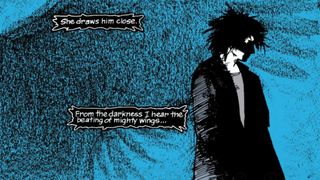
A jaded Wednesday warrior in November 1989 searches the racks for something new. A lonely teenager checks out a battered and laminated trade paperback from the library. A singular new convert downloads the near prominent option on comiXology, spurred into sue aside news of an incoming Netflix adaptation... No matter the introduction, Neil Gaiman's eponymous fairytale of gothic horror always leaves an impact.
The Sandman #1 - #8 credits
Written aside Neil Gaiman
Art by Sam Kieth, Microphone Dringenberg, Malcolm Jones Tercet, and Daniel Vozzo
Lettering by Todd Klein
Published by DC
'Rama Rating: 10 out of 10
The Sandman's first arc, collected as 'Preludes and Nocturnes,' illustrated monstrously by Sam Kieth and so in quite an the opposite mode by Mike Dringenberg, is initially a narration of pure revulsion. But as that first double-squirrel-sized emerge gives way to the series proper, its scope widens and Gaiman's vision of blue fantasy becomes clearer.
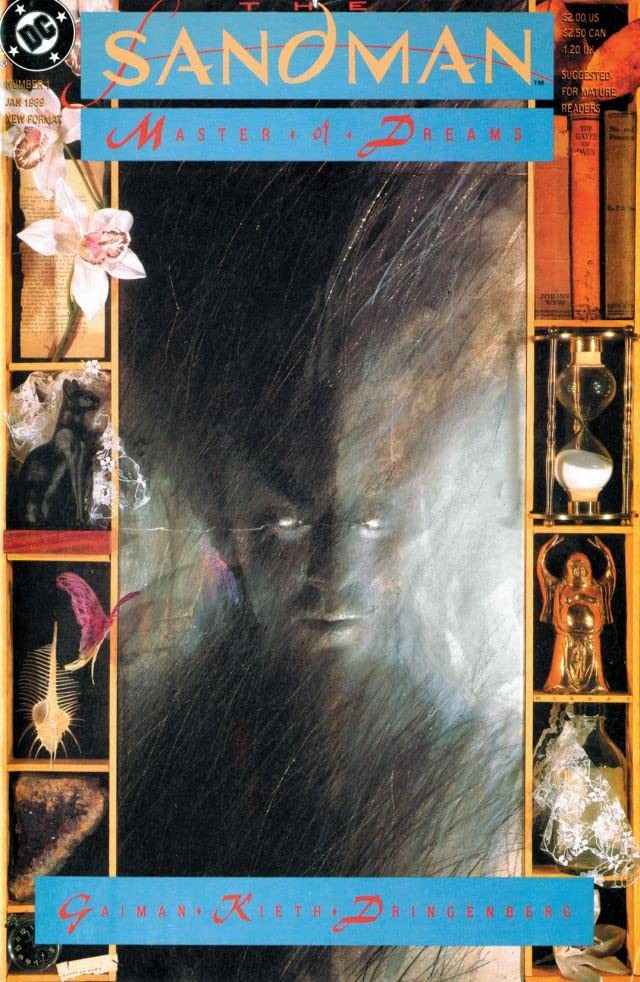
As far as secret plan goes, this is a unlobed tale. Woolgather (capably named, as helium's the God Almighty of Dreams) becomes imprisoned by an occultist for nigh of the 20th century. After finally breaking free and indulging in revenge, he seeks threesome totems of big businessman he lost along the way: his pouch, his helm, and a magic ruby. In his pursuance to regain his lost trinkets, he travels from Hell to Arkham Asylum, detrition shoulders with the wider DC Universe and shedding light on a whole new plane of creation as he does so.
The offse eight issues of The Sandman are notable not for an elaborate plot, merely for its overpoweringly fresh tonicity. Narrated with literary flair from the linear perspective of the denomination hero, Gaiman plunges the reviewer into a world of wild mythology. Dream lives in a run-down castle inhabited with ancient mythologic figures, is on a number one-describ basis with the myriad demons of Scheol, and has all the powers of, well… the god he is.
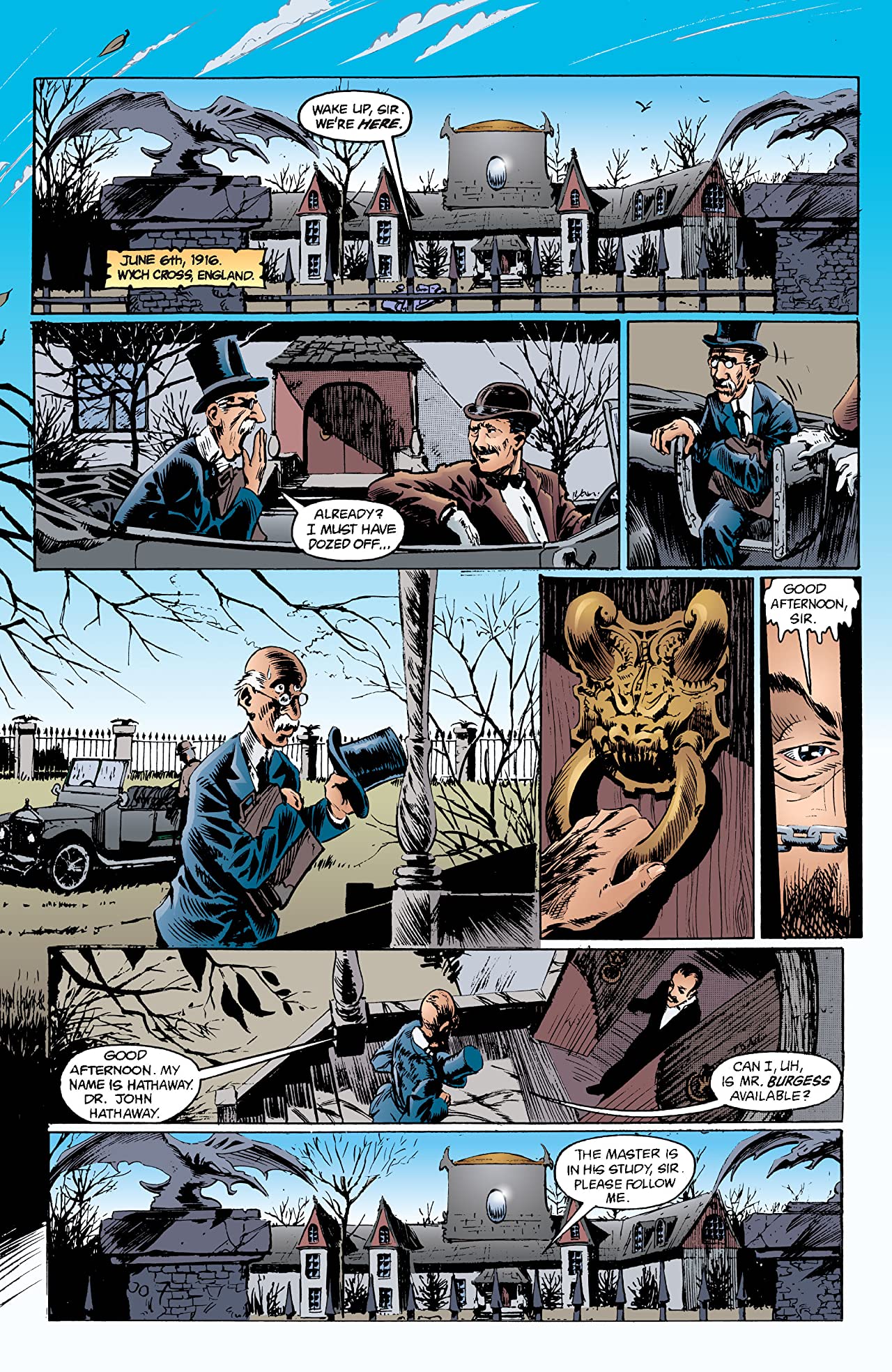
The Sandman #1 prevue
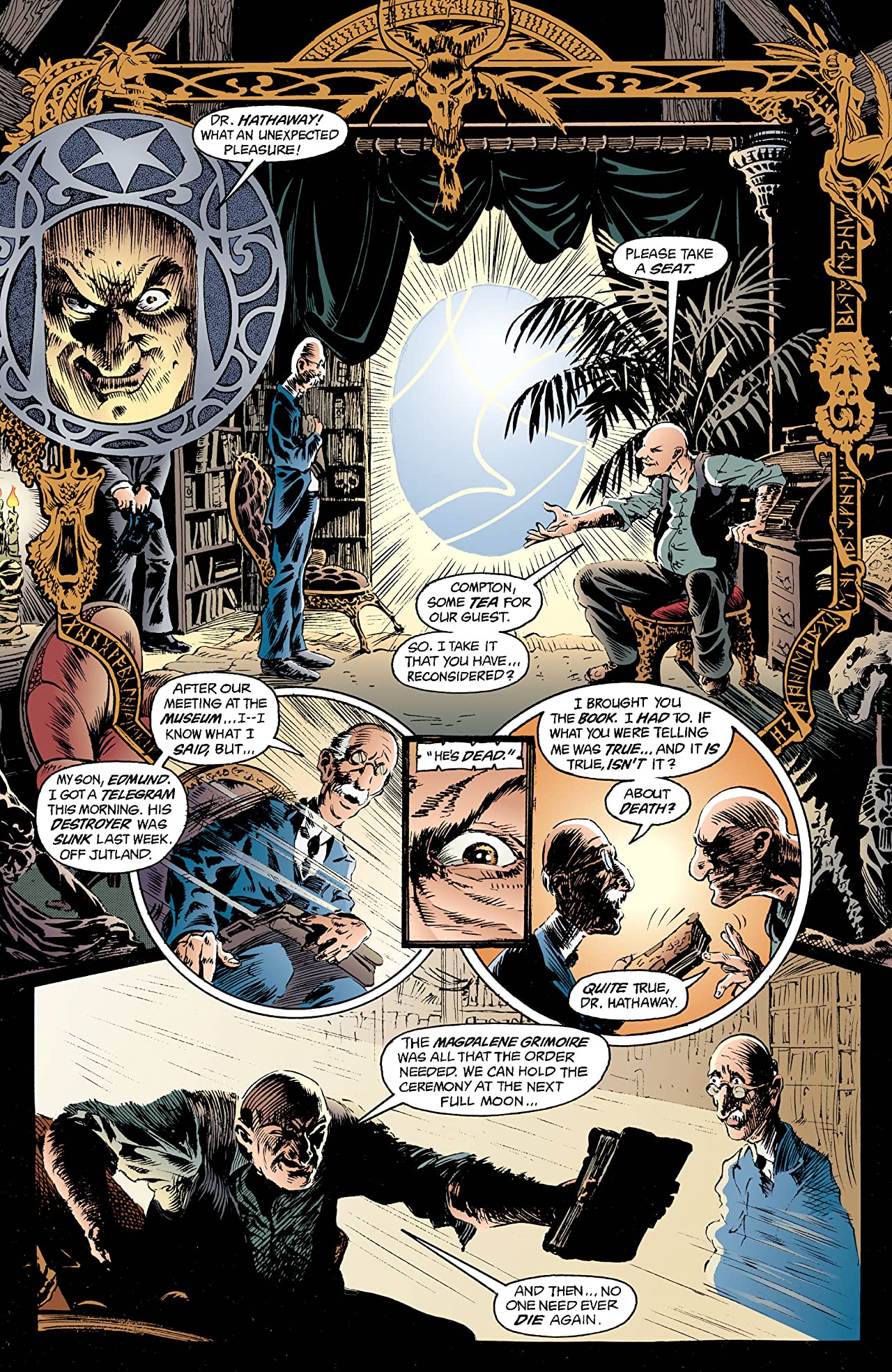
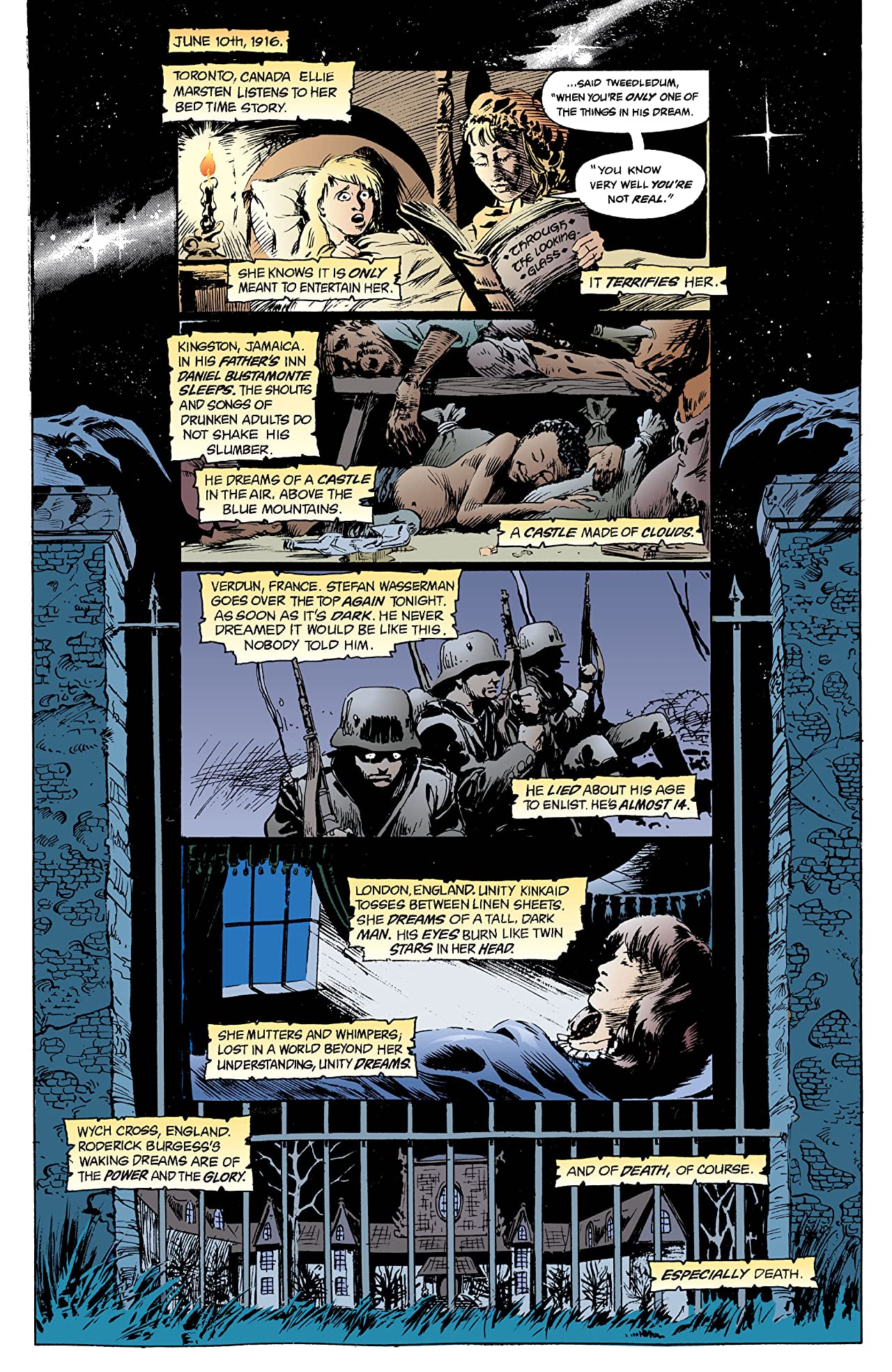
Gaiman builds his world through bitty vignettes, ab initio describing the horrendous impact of Dream's imprisonment on the dormant man, then flitting 'tween the sleeping and the dying depending happening what the focus is at the prison term. When he's not darting behind closed eyes, he's immersing the subscriber perfectly in alien worlds. Whether the setting is Hell operating theatre a diner in the thrall of Dream's ruby, Gaiman makes predestined everything is dead otherworldly.
As Dream transforms from prisoner back to fully defined god, The Sandman's first ac sees Gaiman experiment with the possibilities of a unit of time series. Constantine, Etrigan, Martian Manhunter… there's no an issue that goes by without a node star. Thankfully, Gaiman integrates them in a sensible elbow room that doesn't betray the series' strong voice. It is this flexibility and experimentation that are The Sandman's biggest strengths.
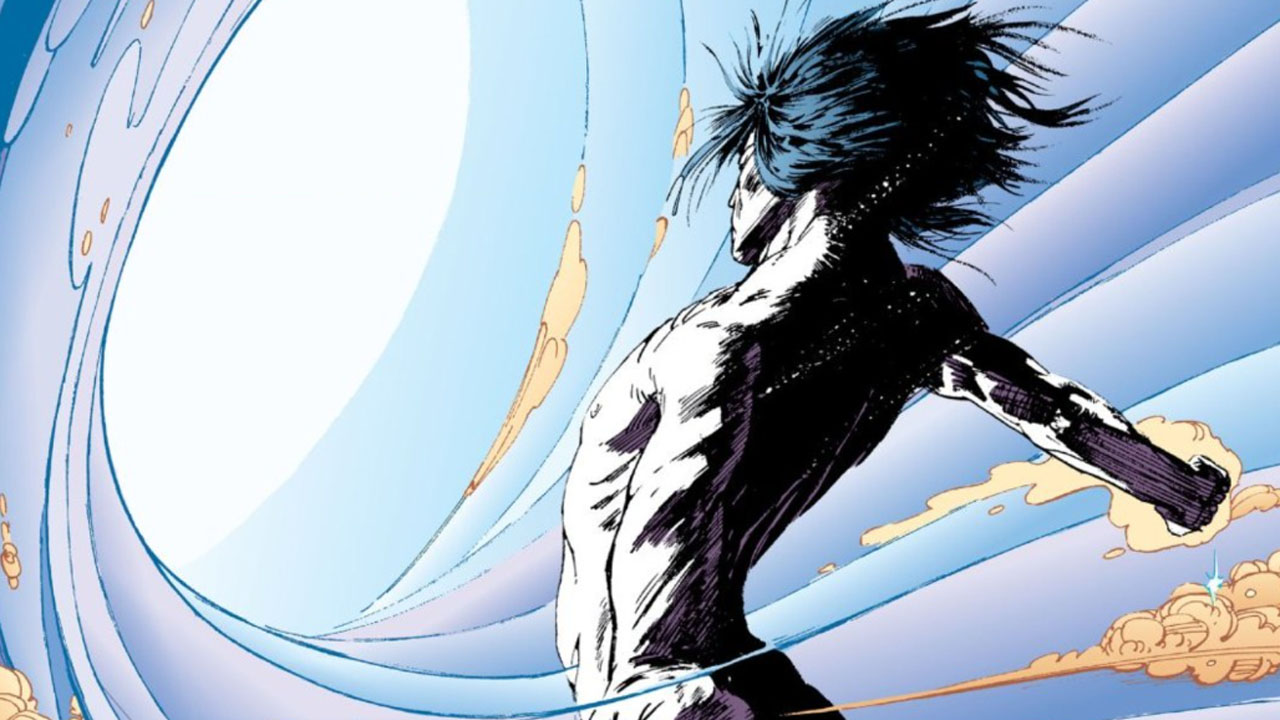
That spiritualism is brought home by the two pencillers at process these octet issues. Sam Kieth's pencils are imperfect, wildly varying in poser, and often with technically inaccurate position or scale. And eventually his scratchy work only enhances the mental agony that Gaiman describes. On that point's an nonpartizan, punky feel to these early issues; a aggressive pleasing not usually seen in a agiotage series. Kieth often frames the prospect with ornate borders to match the antiquity of the series' admirer and shapes his panels into bubbles looking outwards into a distorted human race. His characters are craggy and scowling, with furrowed brows and sunken eyes. It is this intricate and antagonistic style that carries the more frightful elements of Gaiman's playscript. Mike Dringenberg inks Kieth end-to-end with a heavy hand, blotting stunned big sections of clad to lend both deepness and a black letter sensibility to the page.
From the sixth consequence onwards, Microphone Dringenberg swaps his pen for a pencil. His cleaner and crisper illustration style immediately make itself better-known, replacement Kieth's funhouse mirrors with a fashion-conscious and almost seductive pseudo-reality. This is most obvious for Death's debut in #8, which is paradoxically the lightest in tone of this prime collection of stories. Of course, Dringenberg's true contribution is the one he makes to Stargaze himself. Kieth's Dream is a sickly and worn figure, whereas Dringenberg softens his features a little and gives him a Sir Thomas More casual modern-day outfit, igniting generations' worth of cosplay material in the work.
Daniel Vozzo's coloring dates these issues the most, with a harsh and contrasting style that works best in the gloom of night but can Be visually jarring in bright of day.
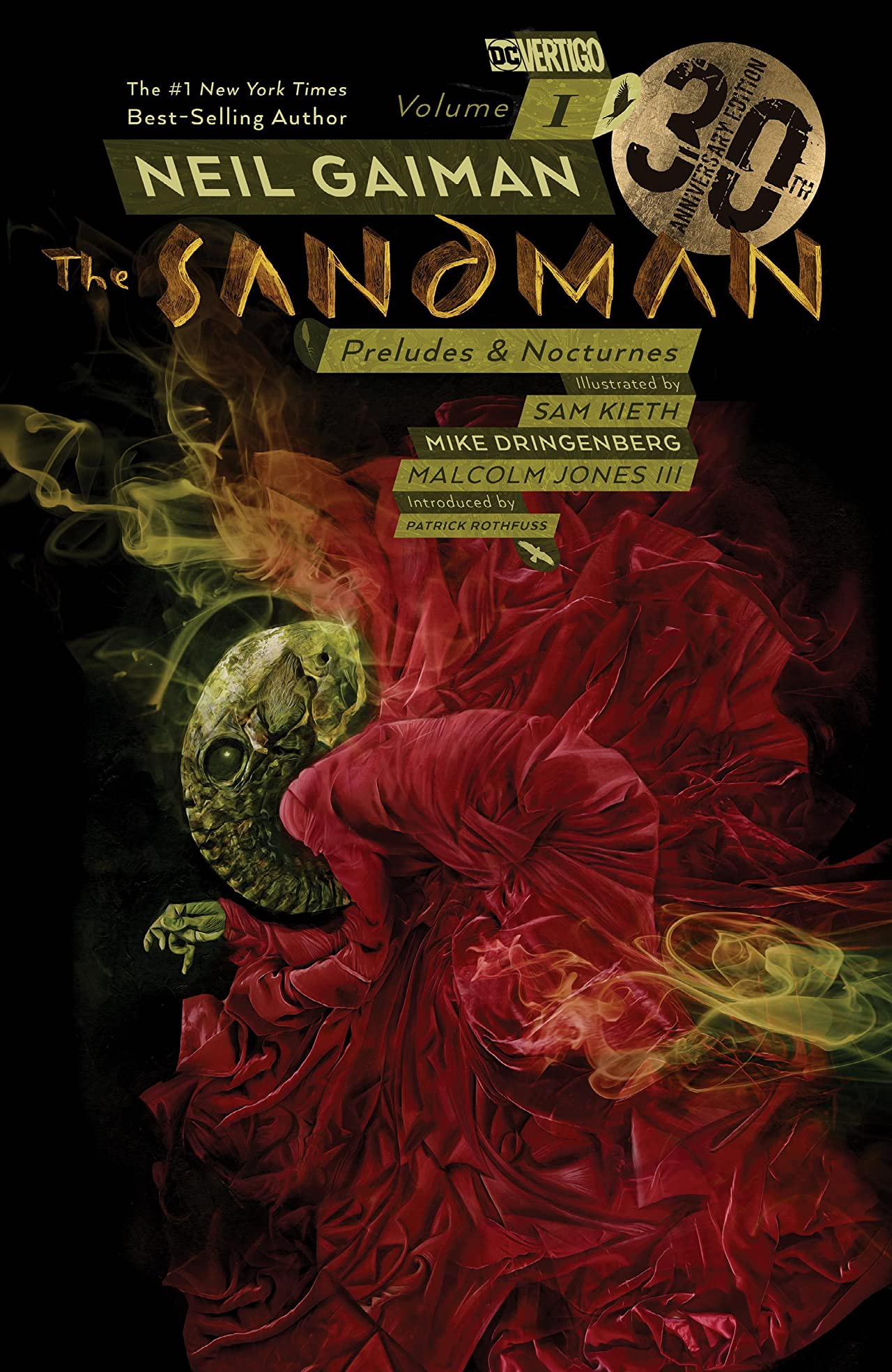
Todd Klein's lettering is some of the go-to-meeting of its era, with a hand that drips atmosphere. Truly, this is how Gaiman's words should look, boxed into fragments of parchment and quivering with fear.
It is difficult to sum up a work ilk The Sandman. Sincerely initialise-smashing in its time and no less impactful in the contemporary, Neil Gaiman, Sam Kieth, and Mike Dringenberg stimulate created eight distressful and ingenious issues that worm into your consciousness and demand regular rereads. If you've non yet experienced The Sandman, you should be losing sleep over it.
The entirety of Sandman is available in print and on digital platforms. For the best digital comics reading experience, consult our guide to the Charles Herbert Best whole number comics readers for Android and iOS devices .

Academy Award Maltby has been writing about comics since 2015. Atomic number 2 has also holographic comic book scripts for the British small press and short fiction for Ahoy Comics. Atomic number 2 resides connected the South-central Coast of England but lives in the longbox.

Source: https://www.gamesradar.com/the-sandman-preludes-and-nocturnes-review/
Posted by: strongshotere.blogspot.com
0 Response to "Best Shots review: If you haven't read The Sandman, you should be losing sleep over it - strongshotere"
Post a Comment